Redlands highlight
Historic citrus
Redlands was the heart of California's largest navel orange producing region in the late 1800s and early 1900s.
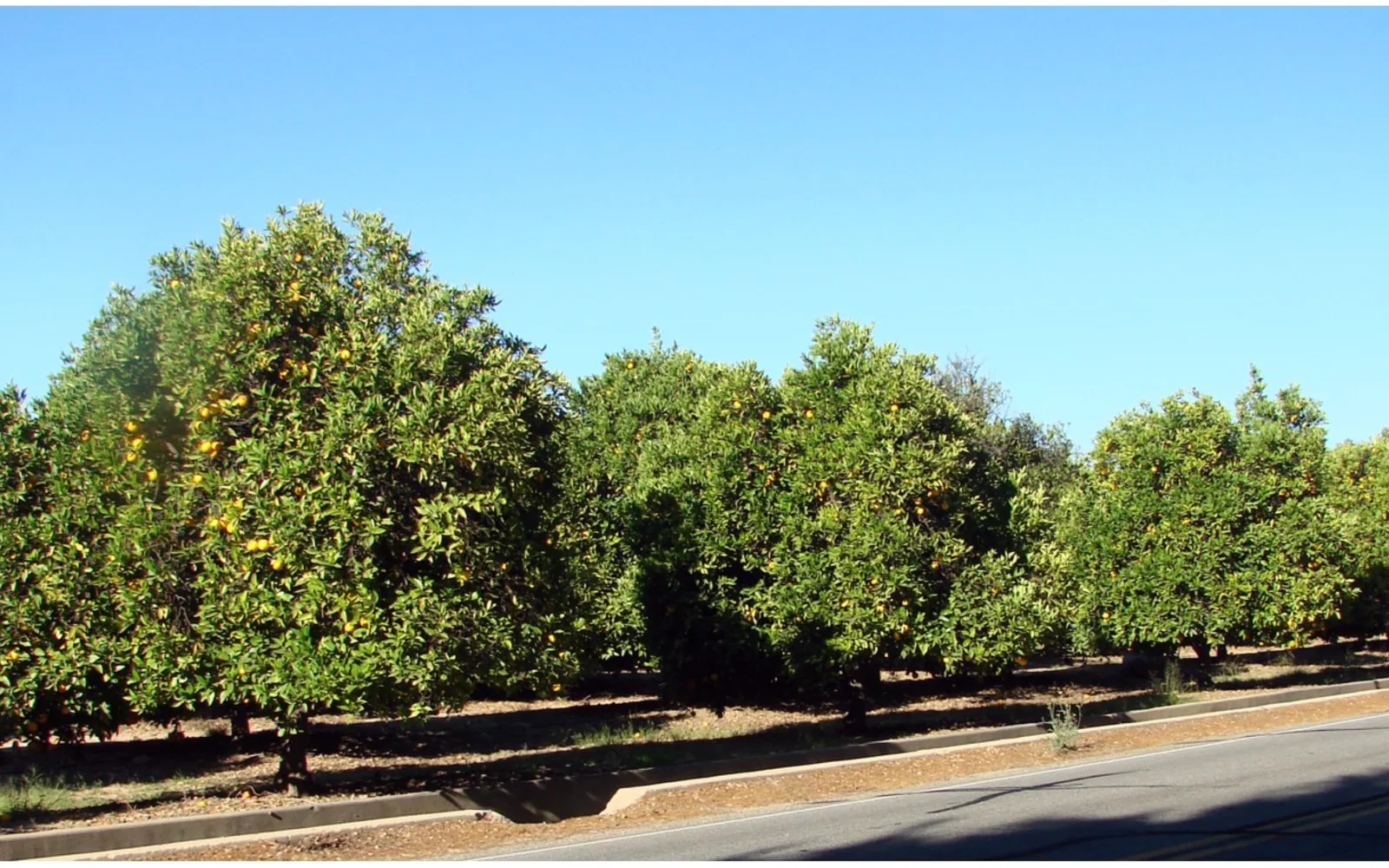
Redlands' role as the center of American citrus production began in the 1880s, after the railroad connected the San Bernardino Valley to eastern markets and irrigation made year-round growing possible in the semi-arid climate. The navel orange, introduced from Brazil via California in the 1870s, thrived in the valley's soil and weather. By the 1890s, Redlands was surrounded by groves, and the city became the hub for packing houses where fruit was sorted, sized, wrapped and crated for shipment. At its peak in the first decades of the 1900s, the region supplied navel oranges to tables across North America, making Redlands one of the wealthiest small cities in the nation.
The citrus economy transformed Redlands physically and socially. Fortunes made in fruit financed the grand Victorian homes and Craftsman residences that line the city's older streets. The same wealth founded schools, civic institutions, and cultural organizations. The University of Redlands itself was built on citrus money. Yet the groves also shaped daily life: the harvest calendar dictated the rhythm of work and seasons, and the packing houses employed thousands of workers who shaped the city's character and community. Though the last commercial groves faded by the 1950s as urban development spread and competition from other regions intensified, the heritage remains visible in the architecture, the street names (Olive, Orange, Lemon), and the city's identity as a place where families built lasting enterprises.
Today's Redlands families carry forward the same long view that the citrus growers embodied: planning for the future, building on solid ground, and securing what matters to the next generation. A term life policy is that same principle applied to a household's finances—a way to make sure that the years of building, the mortgage, the schooling, and the plans are protected if the income that sustains them is lost.